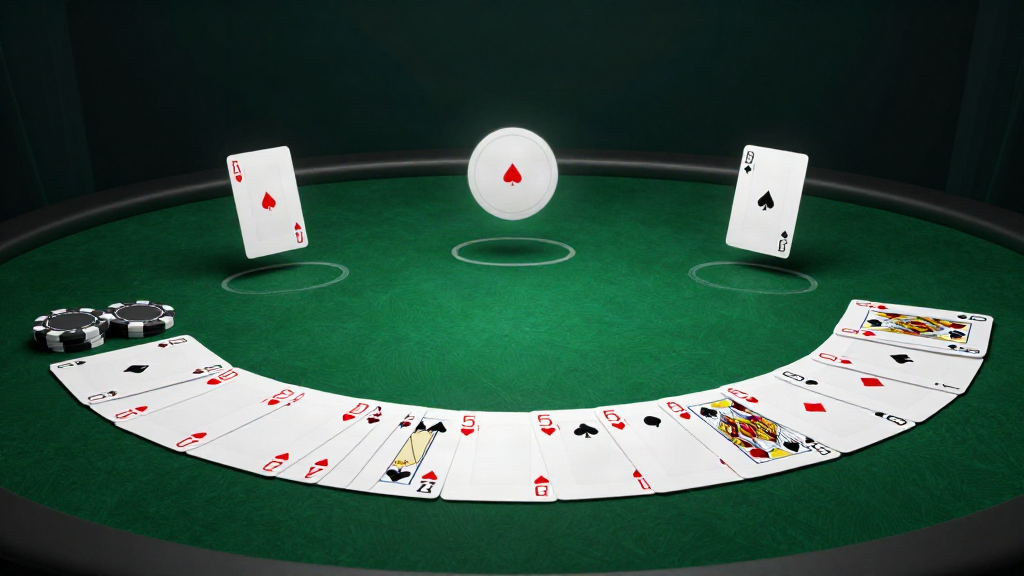
You already own the whole game. It's sitting in a drawer, rubber-banded, next to a deck of Uno.
A standard 52-card deck is the only pack poker asks for - and once you stop treating it as trivia and start reading it as a moving count, three-handed play stops feeling like guesswork. Ready? Let's deal.
The deck itself: 52 cards, no fine print
One pack. Four suits - spades, hearts, diamonds, clubs. Thirteen ranks in each: 2 through 10, then Jack, Queen, King, Ace. Two colors, and that's it.
No jokers. No wild cards. No second deck shuffled in for luck. If a home game adds jokers as wilds, that's house rules, not poker - the real game runs on exactly 52 cards and everyone plays the same ones.
That matters more than it sounds. A fixed deck means fixed odds, and fixed odds mean your decisions have math behind them, not vibes.
Rank order, plus the one twist worth memorizing
Low to high: 2, 3, 4, 5, 6, 7, 8, 9, 10, Jack, Queen, King, Ace.
Ace sits on top - and it also ducks underneath to finish the "wheel" straight: A-2-3-4-5. Same card, two jobs, and the only rank that gets to do it.
Suits make flushes, not winners
Here's the part beginners overthink: suits don't rank against each other. A flush in clubs beats a flush in diamonds only if its highest card is higher. Otherwise they're identical hands.
Suits exist for one reason - so five cards of the same suit can form a flush, and five in sequence and in suit can form a straight flush. That's the whole job description.
Now the three-handed part: why the deck plays differently
At a full table, nine players hold eighteen hole cards before the flop. Most of the deck is gone. Big cards thin out fast.
At a three-player table - a three-seat Sit & Go, say - only six cards leave the deck preflop. The pack stays fat. Aces and kings keep showing up where you'd expect them to be buried. That single difference rewrites how you play:
- Play more hands. With fewer opponents, a hand that's a fold at nine seats is a raise at three. Ranges widen; nitpicking folds money on the table.
- Steal the blinds more. Blinds come around faster and there's less traffic between you and the pot. Aggression pays.
- Position rotates in a blink. The button lands on you constantly. Watch it - short-handed, acting last is worth more than any two cards.
- Count outs with a fuller deck. More unseen cards means your draws are live more often. Turn those outs into pot odds and the calls start explaining themselves.
Your best five from whatever's out there
Hole cards plus the board, best five cards play. Three-handed, you'll often be heads-up to a flop before you've finished your coffee, so the deciding hand is usually made from a smaller pool - which is exactly why reading the deck beats memorizing a chart.
Where this all clicks: a fast three-seat table
Knowing the deck is the theory. PokerTrio is the practice.
Drop into a three-player Sit & Go and the deck logic from above plays out live - quick blinds, tight seats, position flying around the table. No buy-in to start: your seat comes with a free 8,888 TRIO welcome stack, so you're reading real hands within seconds, no deposit, no card details, no waiting room.
Come back daily and login rewards keep the stack topped up. Between hands, arcade-style slots scratch the same itch. And when you string a few wins together, the top-100 leaderboard is right there - a little bragging rights never hurt anyone.
The honest bit about TRIO
Let's keep this plain, because you deserve plain. TRIO is a speculative prelaunch coin. There's no guaranteed launch, and playing - or staking - doesn't promise real, withdrawable winnings. Treat the fun as the point and the upside as a maybe.
Deal yourself in
Fifty-two cards, four suits, thirteen ranks, one ace that swings both ways. That's the entire toolkit - and three seats is the fastest way to learn what it can do.
Your seat's already warm. No deposit, 8,888 TRIO on the house, and a table that moves as fast as you do.
Small table. Big possibilities.